The compass
Temas: Electricity | Energy | Magnetism
Series of experiments related to understanding how electric current is generated
Aim:
See how a compass works and build one with very simple elements.
Material:
- A standard compass
- Plastic jar with a large mouth
- Rectangle magnet
- A little plastic tube (lollipop stick)
- Cyanoacrylate tube
- Thick thread
- Graduated disc
Process:

Compass Construction:
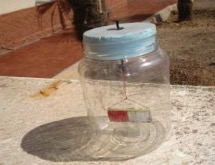
Paying attention to the montage of photography.
- Stick the tube on the edge of the magnet (be careful, the cyanoacrylate is very dangerous, it sticks in seconds).
- Pass the thread through the tube.
- Tie the magnet to the cap, in such a way that, when inserting the assembly into the pot, it does not touch the bottom.
Observation:
- Check how when turning, both in the standard compass and in the one that has been built, the needle (or the magnet) always points in the same direction.
- Check how the needles are parallel, pointing the two compasses in the same direction (they should not be placed too close).
Conclusion:
The compass needle is?
________________________________________________________
________________________________________________________
________________________________________________________
________________________________________________________
Tipos: Practical Activities
Edades: 12-16 years old
Etiquetas: Electricity - magnetism