What Is the Energy Term?
The second major pillar of the electricity bill is the "Energy Term." Unlike the power term, this item is 100% variable: if you go on vacation for a month and unplug every appliance in the home, the cost of this block will be zero euros. Here you pay exclusively for the total amount of electricity you have consumed.
While power is measured in kilowatts (kW), energy consumed is measured in kilowatt-hours (kWh). One kWh equals the energy consumed by a 1 kW (1,000 W) appliance running continuously for one full hour. For example:
- A 10 W (0.01 kW) LED bulb would take 100 hours turned on to consume 1 kWh.
- A 2,000 W (2 kW) electric radiator running for 3 hours consumes 2 kW times 3 hours equals 6 kWh.
How is the price of each kWh set in Spain? In our country, there are two contracting options for households:
- The Regulated Market (PVPC - Voluntary Price for the Small Consumer): The price of electricity changes every hour of every day. It is calculated from the daily wholesale market auction (the electricity pool) combined with forward markets to provide greater stability. When there is plenty of wind and sun generating cheap energy, the price drops; when there is low renewable generation and gas plants come online, the price rises.
- The Free Market: The retail energy supplier agrees with you on a fixed price per kWh for a full year (or flat or customized rates), giving you peace of mind against sudden market spikes.
The Three Time Periods (Time-of-Use Discrimination)
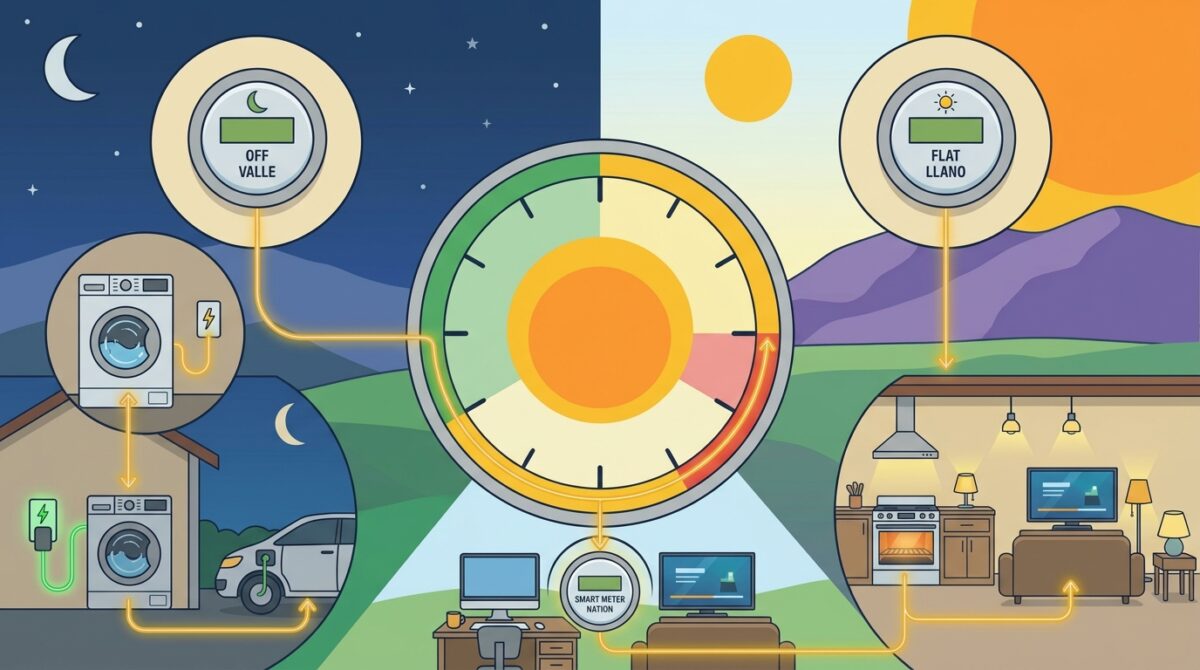
To prevent all citizens from consuming electricity at the same hours and overloading the cables, the Spanish system divides working days into three time periods with different transport costs (network tolls and policy charges):
- Peak Period (most expensive): From 10:00 to 14:00 and from 18:00 to 22:00, Monday to Friday. It coincides with peak work and household activity.
- Standard / Shoulder Period (intermediate price): From 08:00 to 10:00, from 14:00 to 18:00, and from 22:00 to 00:00, Monday to Friday.
- Off-Peak Period (cheapest): From 00:00 to 08:00 on working days, and all 24 hours on Saturdays, Sundays, and national holidays.
Organizing household habits—such as scheduling the washing machine or dishwasher, or charging an electric vehicle during off-peak hours—allows you to save a significant amount of money per year and contributes to a more efficient and sustainable power grid.