Lighting Systems: Fundamentals, Evolution, and the LED Revolution
The Importance of Light and Its Key Parameters
Light is the portion of electromagnetic radiation (with wavelengths between 380 and 750 nm) perceived by the human eye. It serves as the primary channel through which we gather environmental information.
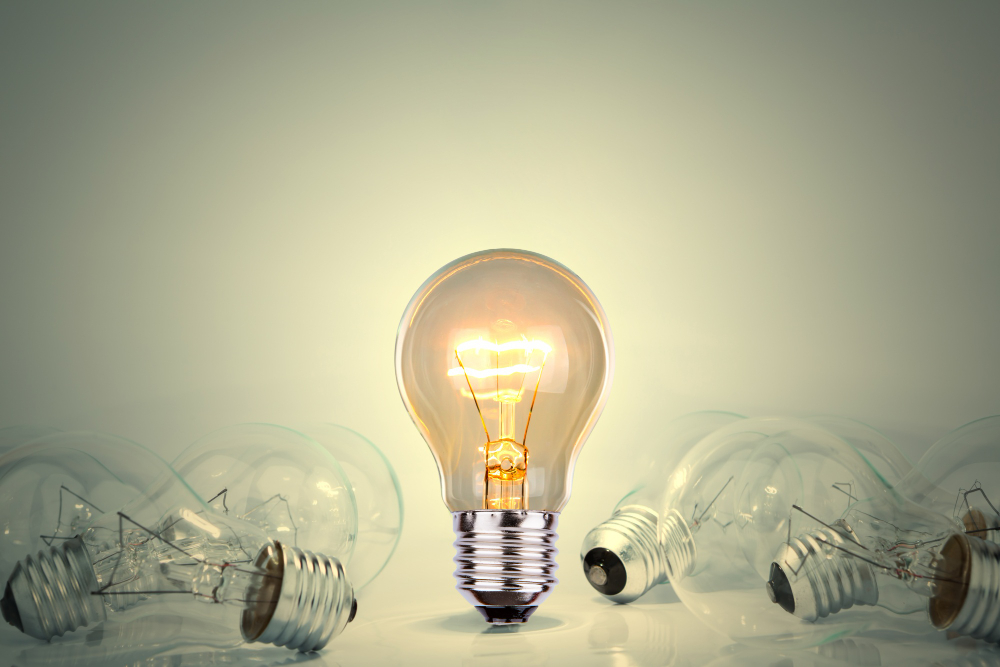
A lamp or light bulb is a converter designed to transform electrical power into visible light. Four core parameters are used to evaluate a light source's quality and efficiency:
- Luminous Flux (Lumen - lm): Measures the total amount of visible light emitted by the source.
- Luminous Efficacy (lm/W): The amount of light produced per watt (W) of electrical power consumed. This is the direct metric for energy efficiency.
- Color Rendering Index (CRI): Indicates how accurately an artificial light source reveals object colors compared to natural sunlight (rated at 100%).
- Service Life: The estimated operating hours before light output degrades significantly or the lamp fails.
Technological Evolution of Light Sources
Throughout history, electric lighting has evolved through three major physical principles:
1. Thermoradiation (Incandescent and Halogen)
Produces light by heating a tungsten filament to temperatures above 1,000 K (Joule heating).
- Traditional Incandescent Bulbs: Converted over 90% of electricity into waste heat and only 5%–10% into light (12–18 lm/W, 1,000 h lifespan).
- Halogens: Introduced halogen gas cycles to extend filament life (1,500–2,000 h) and slightly improve output (20 lm/W).
Current Status: Phased out and banned worldwide due to extreme energy waste.
2. Electrical Discharge (Fluorescent and High-Intensity Discharge)
Generates light by passing an electrical current through a gas or metallic vapor (mercury or sodium).
- Fluorescent Tubes & Compact Fluorescents (CFLs): Increased lifespan (5,000–10,000 h) and efficiency (70 lm/W) using low-pressure gas.
- Sodium Vapor & Metal Halides: Historically used in street lighting and industrial settings for their high output, despite requiring starters and warm-up periods.
Current Status: Largely banned across the EU due to mercury content and inferior efficiency compared to solid-state alternatives.
3. Solid-State Lighting (LED Technology)
LED (Light Emitting Diode) lighting is based on electroluminescence within a semiconductor material. When an electrical current passes through the diode, it emits photons directly and instantly.
Key Advantages of Modern LEDs:
- Sustainability & Reliability: Contains no toxic mercury or fragile glass bulbs and tolerates frequent switching on and off without wear.
- Maximum Energy Efficacy: Delivers 100–160 lm/W, using up to 90% less energy than traditional incandescent bulbs.
- Extended Lifespan: Rated between 25,000 and 50,000 hours with minimal thermal or lumen degradation.
- Superior Light Quality: Provides high CRI (>90%) across various color temperatures (warm, neutral, or cool white).