Introduction to geothermal energy
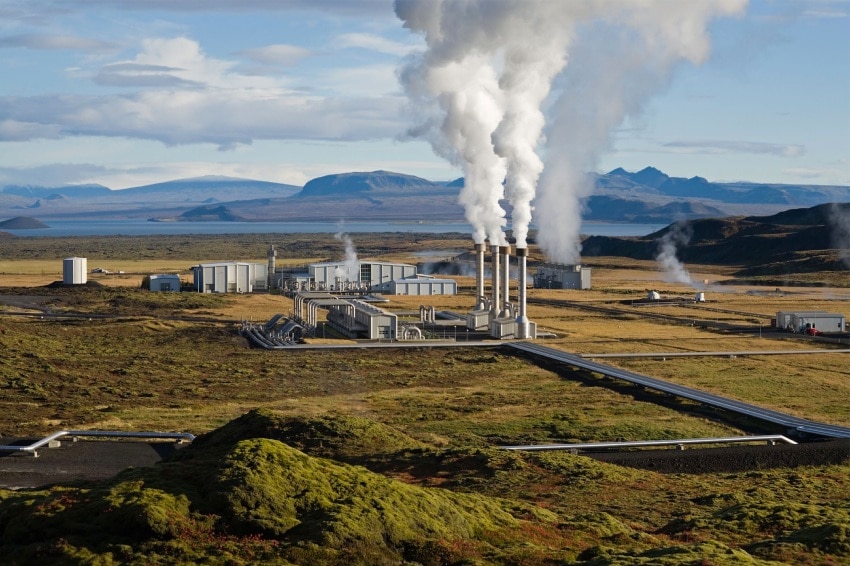
Geothermal energy is the obtaining of heat for heating and for the production of electrical energy through the use of the steam produced by the high temperatures inside the Earth. The internal heat of our planet produces the melting of the rocks and the heating of the underground waters and the underground gases heat the water of the lower layers, which emanates to the surface in the form of steam or hot liquid. These eruptions, normally intermittent, are found in volcanic areas and are known as geysers.
There are several theories that try to explain the high temperatures inside the Earth. Some maintain that it is due to the enormous pressures existing under the earth's crust; others suppose that they originate from certain internal radioactive processes; Finally, there is a theory that attributes it to the incandescent matter that formed our planet.
ADVANTAGES OF GEOTHERMAL ENERGY
- Net useful energy production in case of large and easily accessible deposits, and much less carbon dioxide per unit of energy than fossil fuels.
- The cost of producing electricity in geothermal plants is less than that of coal plants and much less than that of new nuclear plants.
- It is an autochthonous energy that avoids energy dependence from abroad.
- Geothermal energy offers a constant flow of energy production throughout the year, because it does not depend on seasonal variations such as rainfall, river flows, wind, sun, etc., as is the case with wind or hydroelectric energy.
- El área de terreno requerido por las plantas geotérmicas para generar un megavatio de potencia es menor que el que necesita el emplazamiento de otro tipo de estaciones energéticas.
DISADVANTAGES OF GEOTHERMAL ENERGY
- The main disadvantage is the scarcity of deposits that are easily accessible and that, if not well managed, can be depleted in a few decades.
- In some areas geothermal development can destroy or degrade forests or other ecosystems.
- The production of this energy causes emissions of hydrogen sulfide, ammonia, mercury and arsenic.
- It can bring problems of noise, odors and local climate changes.
- They produce high to moderate water contamination by toxic compounds of heavy metals such as mercury and arsenic.
- Total returns are still low.
- Exploitation of many deposits requires expensive technology.
MAIN FEATURES
Various scientific studies carried out at different points on the earth's surface have shown that, on average, the interior temperature of the Earth increases by 3ºC for every 100m of depth. This increase in temperature per unit depth is called the geothermal gradient.
It is assumed that it will vary when they reach great depths, since in the center of the Earth it would exceed 20,000ºC, when in fact it has been calculated that it is approximately of the order of 6,000ºC.
The most widespread way to exploit it, with the exception of springs and thermal baths, consists of drilling two wells, one for extraction and the other for injection.
In the event that the area is crossed by an aquifer, hot water or steam is extracted, used in heating networks and injected again; in the other case it is used in electricity generation turbines.
In the case of not having an aquifer, it is usual to proceed to the fragmentation of the hot rocks and the injection of some fluid.
It is difficult to take advantage of this thermal energy, caused by the low heat flow, due to the low conductivity of the materials that constitute it; but there are points on the planet where geothermal anomalies occur, giving rise to temperature gradients of between 100 and 200ºC per kilometer, these points being suitable for the use of this energy.


