History and Frontiers of the Laser: From Quantum Theory to the Energy of the Stars
When Theodore Harold “Ted” Maiman successfully generated laser light (Light Amplification by Stimulated Emission of Radiation) for the first time in history on May 16, 1960, at Hughes Research Laboratories in Malibu, California, he was unaware of the technological revolution born that day. That technology—and all of its potential applications—remains far from reaching a hypothetical limit. However, as is almost always the case, the beginnings were far from simple.
Chronology of a Revolution
- 1901. The origin of the laser, to be exact, traces back to Max Planck with the publication of his famous article “On the Law of Distribution of Energy in Normal Spectra” in the journal Annalen der Physik, considered one of the foundational works of quantum mechanics.
- 1917. Albert Einstein publishes the celebrated article “Zur Quantentheorie der Strahlung” (“On the Quantum Theory of Radiation”), in which he describes the fundamental processes of light-matter interaction: stimulated emission, stimulated absorption, and spontaneous emission. These processes form the basis of any laser or maser (Microwave Amplification By Stimulated Emission of Radiation) system.
- 1928. Rudolf W. Ladenburg experimentally confirms Albert Einstein's theoretical predictions on the nature of light-matter interaction.
- 1934. Claude E. Cleeton and Neil H. Williams study the absorption of microwaves in ammonia, key research for the development of the first maser.
- 1939. Valentin A. Fabrikant predicts the use of stimulated emission for the amplification of short-wave radiation. In June 1951, together with F. A. Butaeva and M. M. Vudynsky, he receives a patent granted by Soviet authorities describing the amplification of light and radio waves through these phenomena.
- 1947. Willis E. Lamb Jr. and Robert C. Retherford achieve the first experimental demonstration of stimulated emission while studying the fine structure of the hydrogen atom (earning Lamb the Nobel Prize in Physics in 1955).
- 1950. Alfred Kastler proposes the method of optical pumping to achieve population inversion in an active medium. His ideas are experimentally confirmed two years later by Jean Brossel, Jacques Winter, and Kastler himself (awarded the Nobel Prize in Physics in 1966).
- 1953. Joseph Weber delivers the first public lecture on the principles behind masers and lasers.
- 1954. Charles H. Townes achieves the first generation and amplification of electromagnetic radiation via stimulated emission, coining the acronym Maser alongside his students.
- 1955. Nikolai Basov and Alexander Prokhorov, independently of Townes, suggest using multilevel systems to achieve population inversion. In 1964, they share the Nobel Prize in Physics with Townes for this work.
- 1959. Gordon Gould coins the term LASER in writing in his paper “The LASER, Light Amplification by Stimulated Emission of Radiation”.
- 1960. Theodore Harold Maiman operates the first working laser (a solid-state ruby laser). Curiously, his paper “Stimulated optical radiation in ruby” was rejected by Physical Review Letters and subsequently published in Nature.
- 1962. R.W. Hellwarth and F.J. McClung demonstrate the technique of Q-switching using Kerr cells in a ruby laser, generating the first nanosecond laser pulses.
- 1963. Logan E. Hargrove, Richard L. Fork, and M.A. Pollack demonstrate mode-locking for the first time using a He-Ne laser, opening the door to ultrashort picosecond and femtosecond pulses.
- 1995. Gérard Mourou and Donna Strickland invent Chirped Pulse Amplification (CPA) at the University of Michigan, allowing laser power to be amplified exponentially without destroying the amplifying medium. This technique serves as the foundation for all petawatt (PW) laser systems.
- 2018. The Nobel Prize in Physics is awarded to Gérard Mourou and Donna Strickland for their development of CPA, recognizing the transformative impact of ultra-high-intensity lasers on modern science.
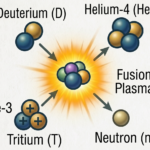
- 2022. The National Ignition Facility (NIF) in the US achieves a historic milestone in physics: net energy gain via laser-driven inertial confinement fusion. For the first time, more energy was generated from the fusion reaction than the laser energy delivered to the target.
- 2023. Anne L'Huillier, Ferenc Krausz, and Pierre Agostini receive the Nobel Prize in Physics for developing experimental methods that generate attosecond pulses of light ($10^{-18}$ s), allowing scientists to capture the ultra-fast motion of electrons inside atoms and molecules for the first time.
The Present and Future of the Laser
Today, it is impossible to imagine modern civilization without laser technology: from LiDAR sensors in autonomous vehicles and global fiber-optic networks to precision manufacturing and high-resolution surgical procedures.
However, the true frontier lies in ultra-intense and ultrashort lasers:
- Attosecond Physics and Nuclear Photonics: Researchers can now observe electron dynamics in real time and interact directly with atomic nuclei.
- Advanced Medicine and Radiotherapy: Large international facilities (such as the European ELI – Extreme Light Infrastructure) use ultra-intense lasers to accelerate particles over meters rather than kilometers, paving the way for more precise and accessible radiation cancer therapies.
- Clean, Unlimited Energy: Following the landmark fusion ignition achieved in late 2022, current research focuses on scaling up the pulse frequency and efficiency of lasers to turn inertial confinement fusion into a viable commercial source of clean energy.
What seemed like science fiction just a few decades ago is now reality in laboratories worldwide, proving that light stimulated by matter still holds its finest chapters for the future.