SpaceX and City Labs make history by launching the world’s first commercial nuclear satellite
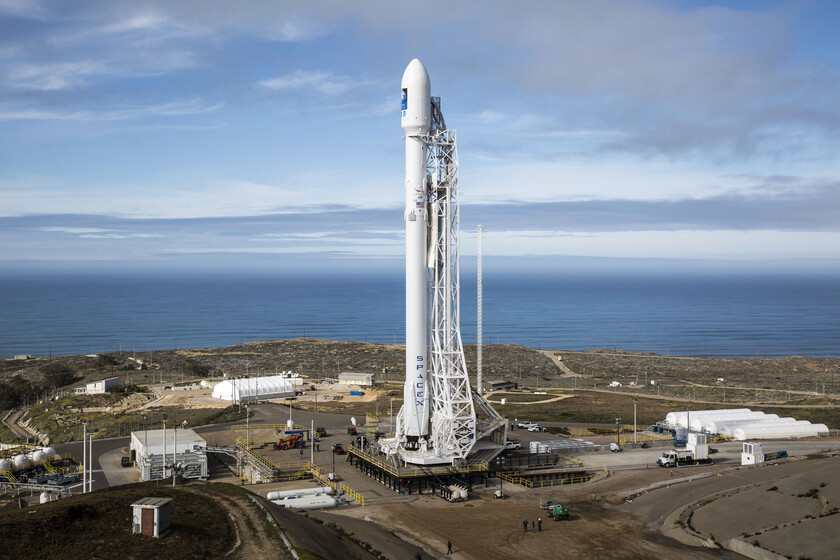
The aerospace industry has reached a historic milestone following the successful launch of SpaceX’s Transporter-17 mission from Vandenberg Air Force Base. On board the Falcon 9 rocket was the Betavoltaic Orbital High-Reliability (BOHR), a CubeSat developed by City Labs, which has officially become the first commercial nuclear satellite in history. This milestone demonstrates that the use of nuclear power to power spacecraft and probes is no longer the exclusive preserve of major public agencies such as NASA, thereby opening the door to this technology for the private sector.
From a technical perspective, the satellite introduces a significant innovation compared with traditional deep-space exploration missions. Whilst the famous Voyager probes derive their energy from heat generated by plutonium decay, the City Labs device harnesses the beta particles from tritium decay, converting them into electricity via a semiconductor. This move towards tritium offers a fundamental strategic advantage, as it emits far less radiation, making its handling before launch infinitely safer for operators and reducing logistical risks.
The development of this technology addresses the need to power spacecraft on long-distance missions where traditional fuel is unfeasible, as well as in environments where solar power is not a viable option. The latter scenario will be key for the future Artemis mission bases at the Moon’s south pole, a region characterised by areas of constant shadow.
Despite its strictly commercial nature, the project enjoys strong public backing, having been funded under a contract with the US Department of Defence and authorised by the Federal Aviation Administration (FAA), establishing itself as a proof of concept that will shape the future of private space exploration.