September 5, 1977 - The Voyager I space probe is launched from Cape Canaveral

This probe, sent to observe the outer planets, flew over Jupiter on March 5, 1979, and Saturn on November 12, 1980.
This probe carries with it a gold disc containing:
- 90 minutes of a selection of music from various world cultures
- Greetings in 55 languages
- Greetings from the then Secretary General of the United Nations
- The essay "Sounds of the Earth" which is a mixture of characteristic sounds of the planet
- 115 images where the location of the solar system, the units of measurement used, characteristics of the Earth and characteristics of the body and human society are explained in scientific language

This disc was devised by a scientific committee chaired by the astronomer Carl Sagan, who, referring to the message, assured that its main objective is not that it be deciphered, but rather that by the fact of its simple existence it already reveals that of humans, as well such as efforts to contact other intelligent species that may exist outside the solar system.
Voyager I studies the Outer Solar System, has already passed the zone called heliopause and is in interstellar space. It crossed over on September 13, 2013, becoming the first man-made object to reach this region.
There is a second probe, Voyager II, and both have become the farthest artificial instruments ever sent by humans. To do so, the ships contain nuclear electrical generators that allow their scientific instruments to continue to function.
The mission, which was projected to last five years, celebrated its fortieth anniversary in 2017. NASA scientists continue to receive data from the Voyager probes via the Deep Space Network (DSN).
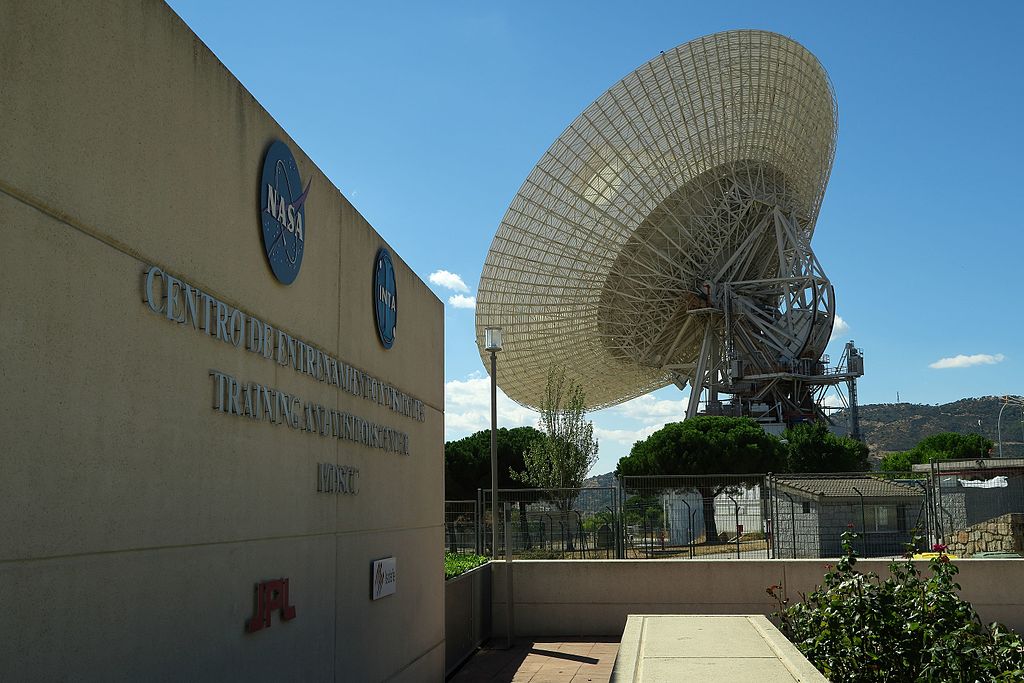
The signals sent from MDSCC (Madrid Deep Space Communications Complex) to Voyager 1 take 14 hours and 20 minutes at the speed of light to reach it and the same time to return (28 hours 40 minutes in total). And it keeps walking away.
Currently, due to budget problems, the project is controlled by a group of only 10 people belonging to the Jet Propulsion Laboratory, which could cause the mission to be abandoned in the near future, leaving both probes to continue on their way without anyone there. to hear them on Earth.