A milestone that could change the future of energy: Batteries that could last 6,000 years
Researchers at the Daegu Gyeongbuk Institute of Science and Technology in South Korea have developed a nuclear battery, i.e. a small device capable of generating electricity by harnessing beta particles emitted by materials such as carbon-14 or radiocarbon (an isotope used in the dating of organic materials), which can be easily stopped with a thin sheet of aluminium. The choice to use carbon-14 is not arbitrary, as it is safe, economical, and easily recyclable.
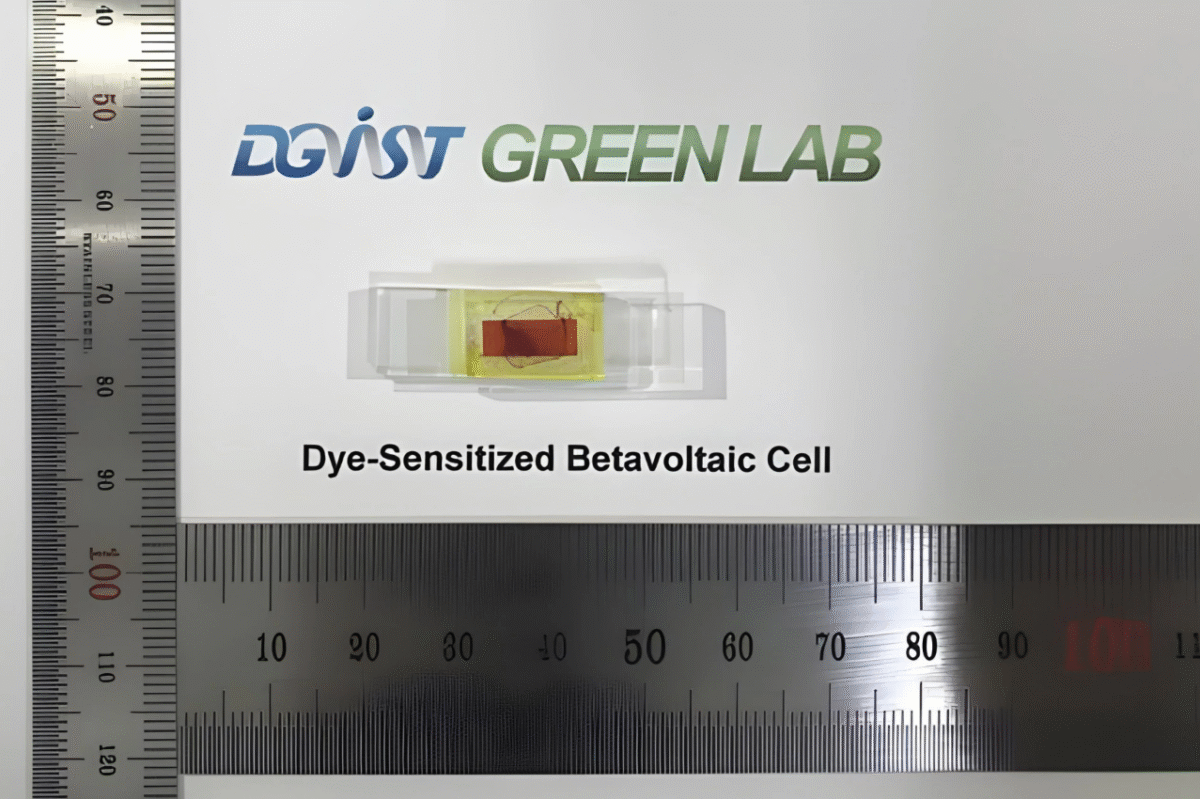
This discovery could be used, for example, in environmental sensors that monitor air or water quality in remote locations without the need for frequent maintenance. However, it is not ruled out that, in the future, it could be used in more common, everyday devices, from mobile phones to electric vehicles or even smart homes.
This technology is not yet ready for widespread use because its energy efficiency is relatively low (approximately 2.86%), meaning that it cannot yet fully compete with conventional batteries in terms of power.
There is no doubt that this development represents a huge step towards cleaner, safer, and virtually eternal energy, bringing us closer every day to an unprecedented energy revolution.
News source: Daegu Gyeongbuk Institute of Science and Technology