Kw and euros
It's the date when the electricity bill arrives and, as you would expect, the kW in your house has shot up… and the euros. Take a good look at it; analyze the bill calmly:
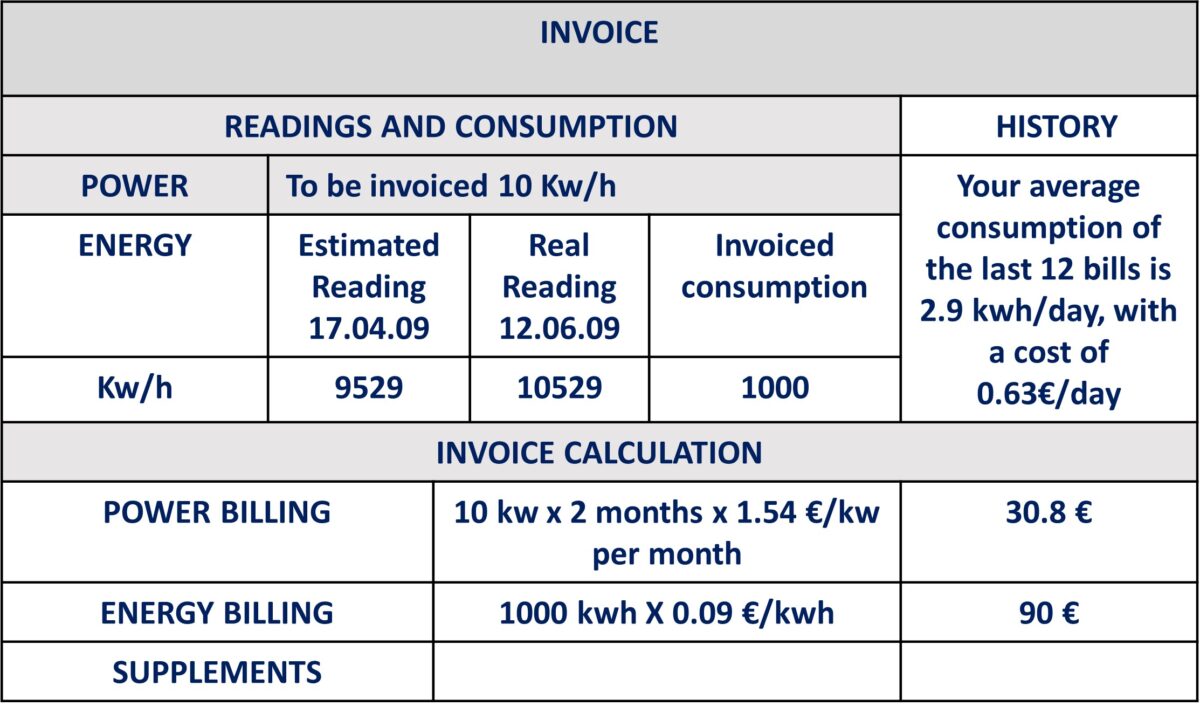
- What different items are you counting?
- What does the billing of power correspond to?
- What about energy?
You are spending more than you should be… Take a look at this table to get an idea of the standard consumption of the different electrical appliances that are usually found in households about their frequency of use:
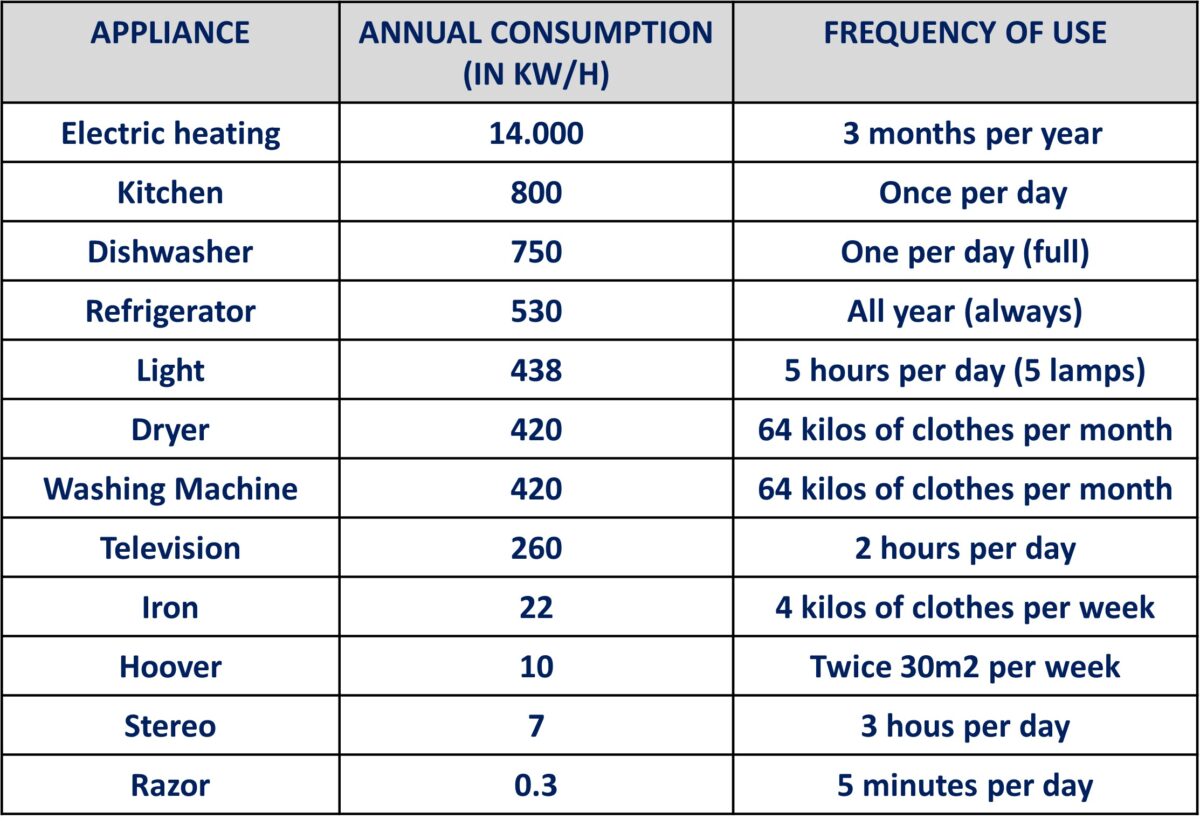
From these annual data, draw up a similar table based on the use of different electrical appliances in your home. The duration and frequency of use will vary, and therefore the consumption, but you can take the average kW/h values in the table as reference values. If you only turn on the TV for 1 hour a day, the annual consumption will be half of the indicated value, 130, of course!
- Given the results you obtain, and knowing the price of kW/h, make a hypothesis that explains why you pay so much, according to your bill; have you done something or carried out some activity that could be considered extraordinary or out of the ordinary?
Think of a strategy that will allow you to control your energy expenditure from now on.
You already know that several standards help a lot to save energy and money. Therefore, from a savings point of view, it is preferable and more economical:
- Use a larger amount of hot/cold water than a smaller amount of hot/cold water….
- Do not start the boiler until ________.
- Switch off the cooker just before/during/after the water starts to boil.
- Put/do not put the lid on the cooker.
- Use a pressure cooker, which saves one-third/none of the energy.
- Do not set the fridge thermostat below the optimum temperature. Setting it to 7°C instead of 5°C saves nothing / 15% energy.
- Defrost the refrigerator when there is more than 2 mm of ice. If the ice layer is more than 1 cm, nothing happens / it uses less energy because it is already frozen / it uses twice as much as normal.
- In the washing machine, energy-saving programs save a lot of energy / they are not efficient. For half as much laundry they do not / do use half as much, but more / less.
Apart from the proper use of electrical appliances, other factors contribute to energy savings. A very important one is the correct insulation of buildings and dwellings (walls and windows) to avoid heat losses, which are often considerable.