China is to launch a prototype reactor that converts nuclear waste into energy
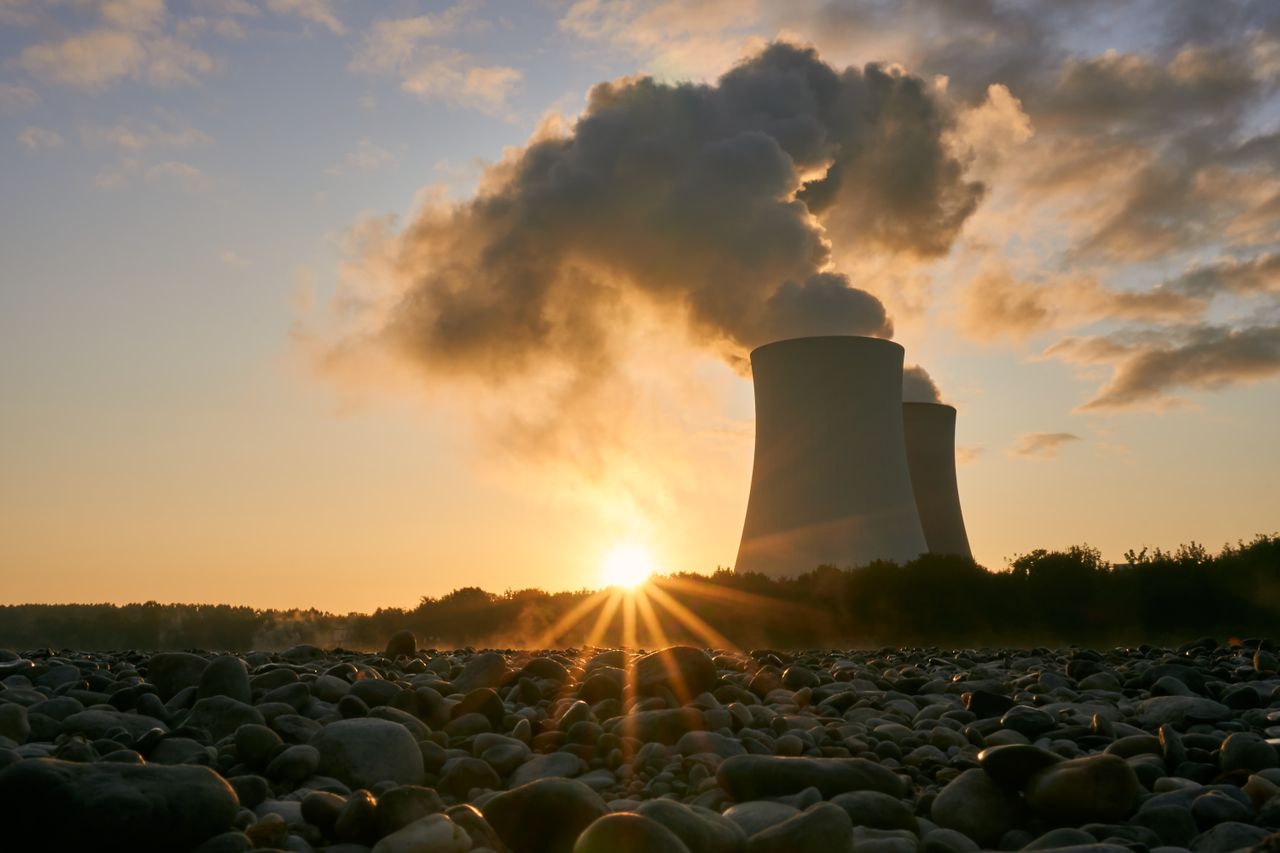
Accelerator-driven Subcritical System (ADS) reactors have been under development for decades, but no one has yet brought them to industrial scale. China began researching this technology in 2011 and, in 2021, developed a prototype, becoming the first country to achieve an operating intensity suitable for industrial applications. In 2027, China will launch its first one-megawatt prototype reactor in Huizhou, in the southeastern province of Guangdong, capable of using nuclear waste to generate ‘sustainable, safe and stable’ energy, becoming the next step towards commercial viability.
The Chinese Academy of Sciences (CAS) and other state-owned nuclear companies have developed this reactor, which will consume uranium 100 times more efficiently than conventional reactors and reduce the lifespan of nuclear waste to less than one-thousandth, drastically cutting the time that waste remains radioactive.
ADS are a hybrid between a nuclear reactor and a particle accelerator. On the one hand, the reactor operates in a subcritical state, meaning that it cannot sustain a nuclear chain reaction on its own, but it relies on an external supply of neutrons from the accelerator. A beam of high-energy protons from superconducting linear accelerators strikes a liquid target of lead and bismuth at 0.8 times the speed of light. The impact triggers a process called ‘spallation’, which releases an enormous amount of neutrons, which, on the one hand, maintain fission in the reactor core and, on the other, bombard the actinides, the longest-lived elements in nuclear waste, converting them into much shorter-lived isotopes. In addition, the system converts uranium-238, which in conventional reactors is considered practically waste, into plutonium-239, a fissile fuel. Therefore, if the beam is cut off, the reaction stops immediately and automatically.
While China is developing this project, Europe also has its own, the ‘Myrrha’ project, at the Mol nuclear facility in Belgium. Conceptually, it is similar to the Chinese prototype (a superconducting proton linac, lead-bismuth target, and subcritical core cooled with the same alloy). Still, its final scale will be much larger, up to 100 thermal megawatts. It will also be used as a conventional critical reactor when not operating as an ADS. Currently, its first phase, called ‘Minerva’, is underway, and involves bringing the accelerator up to 100 MeV. Construction began in 2024, and the goal is to have it operational by 2027.
Japan is also researching its own ADS, with a programme linked to the J-PARC accelerator complex that includes two experimental facilities, one for reactor physics and the other for testing lead-bismuth materials, as a preliminary step towards a future 1.5 GeV reference ADS that, for the moment, only exists on paper. South Korea, India and Russia also have active design and research programmes, but none of them has leaped to build a real-power prototype.