Distribution Companies vs. Retail Suppliers
One of the biggest sources of confusion in Spanish households is not knowing exactly who we pay for electricity. Many consumers think the company that sends their bill every month is the same one that puts up the street poles and fixes outages, but in Spain they have been two completely separate roles since the liberalization of the electricity sector in 1997.
The law requires separating network activities (which are a regulated monopoly) from the sale of energy (which operates in free competition). To understand this without doubt, just think about how an online purchase works:
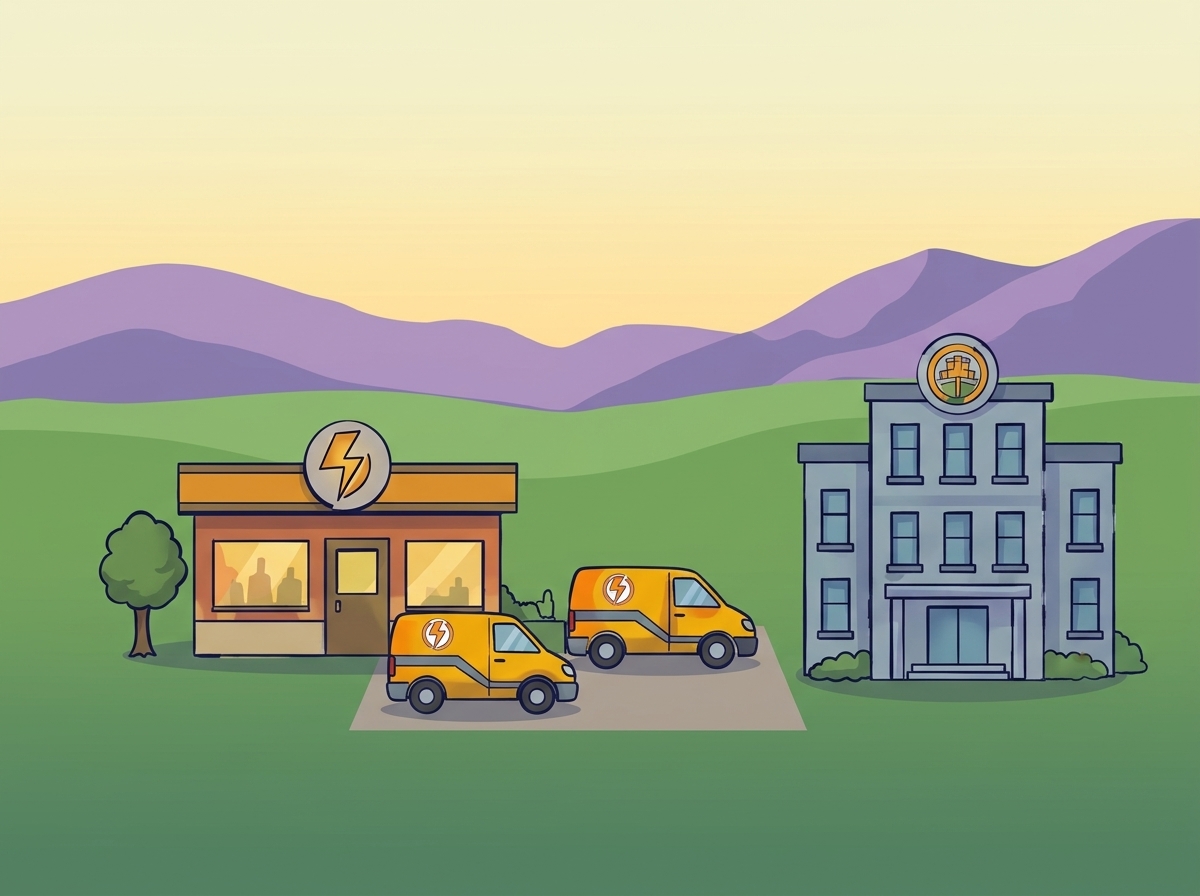
- The Distribution Company (The roads and the delivery driver): It owns the physical infrastructure (cables, transformers, and meters). Its job is to ensure electricity reaches your home with good quality and to read your digital meter to know how many kilowatt-hours you have used. You cannot choose it; it is determined by the geographic area of your home, and its compensation is set by regulatory bodies.
- The Retail Supplier (The store where you buy): It is the company you sign a contract with, the one that offers you different tariffs, discounts, or maintenance services, and the one that sends you the bill at the end of the month. In Spain there are hundreds of retail suppliers, and you can switch from one to another freely at any time and at no cost, without any technician having to visit your home to change cables or meters.
How do they communicate with each other? When you turn on an appliance, electricity passes through your digital meter. The distribution company collects your consumption data hour by hour and sends it to your retail supplier. The retail supplier multiplies that data by the price you agreed upon with them, issues the bill, and—with the money it charges you—pays for the electricity in the wholesale market and pays the distribution company the corresponding tolls for using its cables.
To make sure this entire system does not mix up homes when you switch companies, every supply point in Spain has a unique, unchanging identifier called a CUPS (Universal Supply Point Code). It always starts with ES followed by 18 or 20 digits and letters: it is the "ID card" of your home's electrical installation.to de Suministro). Empieza siempre por ES seguido de 18 o 20 dígitos y letras: es el «DNI» de la instalación eléctrica de tu casa.