The oil journey
Transportation and refining
The crude oil that comes out of the wells is practically useless, which is why it has to be refined in order to extract the really useful products.
At first, the refining process was carried out next to the wells, until it was seen that it was more profitable to refine it near the large centers of consumption, since each country had certain needs. This led to the rapid development of the oil transportation sector, one of the most important economic activities today.
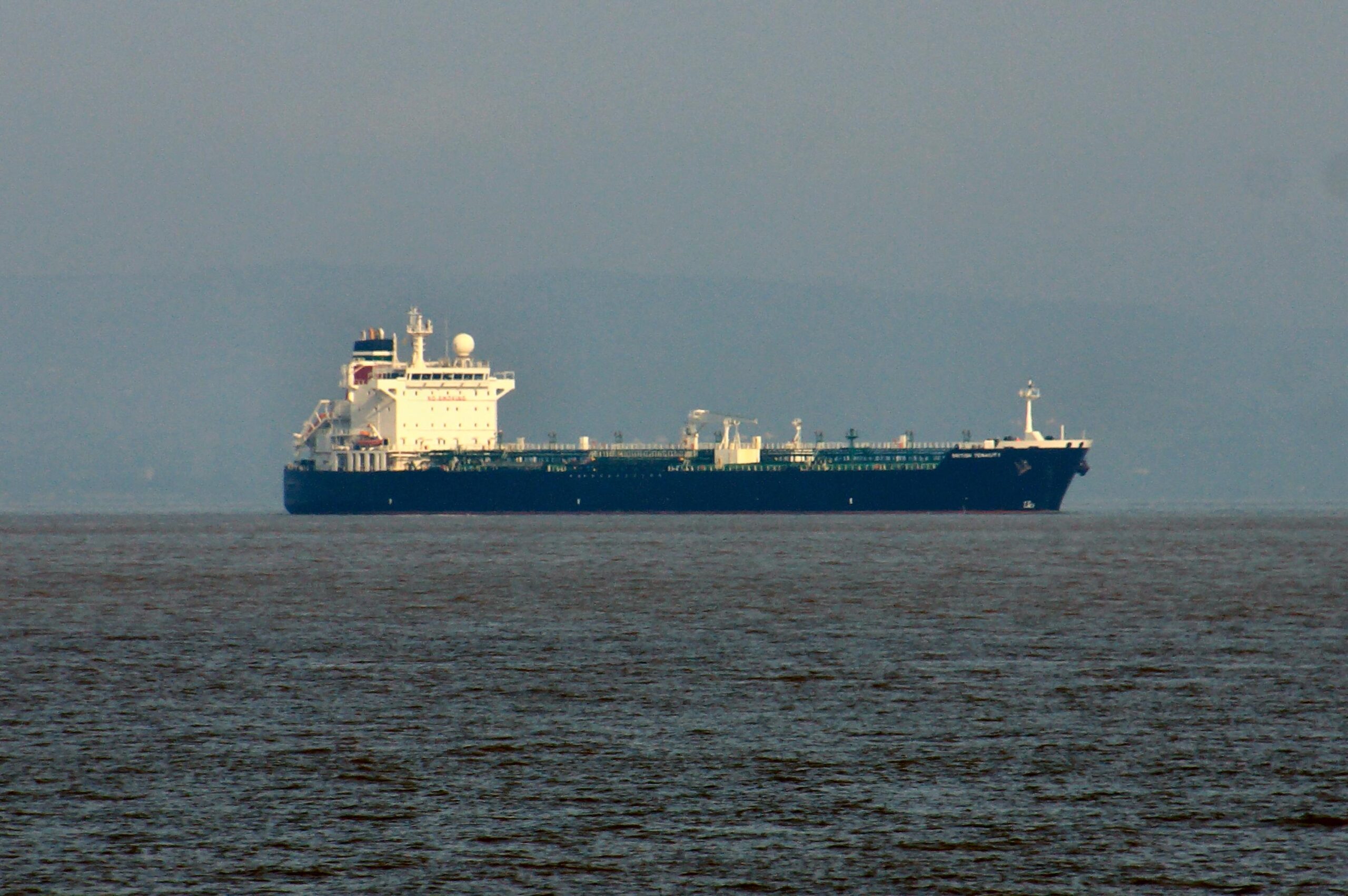
Currently, practically all the oil is transported, either by sea, in tankers that can contain up to 500,000 tons -the so-called supertankers-, or by land through oil pipelines or pipelines, conduits of more than one meter in diameter and hundreds of kilometers long, through which the mineral oil is propelled. A fleet of oil tankers with a capacity of more than 250 million tons of crude oil constantly navigates the planet's seas and oceans.
The different qualities of crude oil are determined precisely by the characteristics of its components. Thus, those oils that have a higher proportion of light hydrocarbons -that is, hydrocarbons with a low number of carbon atoms- are considered to be of higher quality, since more valuable products can be obtained.
The industrial process, by which all these products are extracted from crude oil, is known as refining and is carried out in refineries. A refinery is an industrial complex that operates 24 hours a day, 365 days a year. It has a small team of people with highly professional qualifications, who constantly supervise its operation, thanks to the automation of processes.
Refining begins with distillation, an operation that is carried out in a tower over 50 m high, divided into different horizontal compartments, into which oil previously heated to 400°C is introduced. Continuously, the crude oil enters and the different distilled products leave according to their boiling points. With this operation, the refining process is not finished but, later, the compounds obtained are treated in other process units, where their molecular composition is modified or unwanted compounds, such as sulfur, are eliminated.
In this way, the products will be obtained, in accordance with the technical and environmental requirements that are necessary for their commercial use.
Globally, refining capacity is located approximately 1/5 in the United States, 1/8 in Russia, and 1/5 in Western Europe as well.
Distillation products of crude oil
Through the distillation of petroleum, all those compounds with a similar boiling temperature are progressively obtained, and which also have similar characteristics.
- Gases: Substances whose boiling point is between -165°C and 0°C -methane, ethane, propane and butane. Propane and butane are also called LPG or liquefied petroleum gases.
- Naphthas, Petroleum Ether: Volatile fraction that distils between 20 and 60°C, and contains mainly pentanes and hexanes. They are used as raw material in the petrochemical industry, to obtain plastics and chemical products.
- Gasoline: Mixture formed by hydrocarbons from four to twelve carbon atoms, with a boiling point between 30 and 200°C. They are used as automotive fuel.
- Kerosene: Petroleum fraction with a boiling point between 150 and 300°C. It has twelve to sixteen carbon atoms, and is used as jet fuel, household fuel, and lighting.
- Gas oils: Compounds formed by chains of fifteen to eighteen carbon atoms, with a boiling point of 175 to 400°C. They are fuels for Diesel engines and heating.
- Fuel oils: Heavy products obtained as residues of atmospheric distillation. They are used as fuel for large facilities, such as thermal power plants.
- Lubricating oils: Fraction containing between sixteen and thirty carbon atoms. Their density, viscosity, resistance to oxidation, and low freezing point make them useful as lubricants in the world of mechanics.
- Waxes: Mixture of hydrocarbons with a high melting temperature, mainly linear chain, which are obtained as a by-product in the manufacture of lubricating oils, have many applications as components in the manufacture of candles, polishes, cosmetics, tires, etc.
- Asphalt: Solid black color, known since ancient times, which is used to pave communication routes and waterproofing.
- Coke: Coal obtained from the heaviest fractions of crude oil.


