Waste and effluent management in a nuclear power plant
In a nuclear power plant, as in any industrial facility, along with the product obtained (in this case, electricity), there is a series of wastes and effluents.
High-level radioactive waste, basically fuel assemblies that have already been in the reactor core for one or more production cycles, is stored underwater in the spent fuel pools at the plant itself so that after the appropriate decay time, they can be disposed of in metal containers.
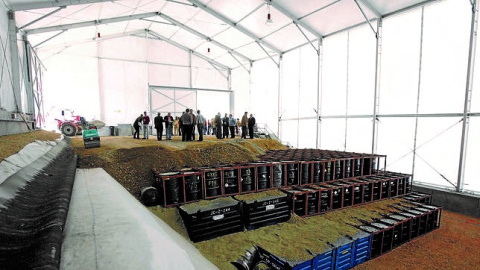
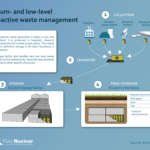
As regards the rest of the wastes (low and intermediate levels), which are radioactive liquids and gases, solids, resins, and contaminated sludges (from filtration, purification, and treatment equipment), tools, overalls, and work clothes, etc., the operating philosophy of the plants is reduction, decontamination, declassification, etc.
The products from the fuel assemblies, together with corrosion and activation products and fission products in the free uranium, are released in the core coolant, which, depending on their state, are removed by means of purification systems, drains, and collectors, and decontamination in the spent fuel storage pools:
- Solids: They are placed in containers and conditioned for final storage.
- Liquids: They are sent to a treatment system that separates the solid part that they may contain for storage, the liquid part to a discharge channel that is released into the environment, and the gaseous part to a gas treatment system that leads to a chimney that is also released into the environment.
- Gaseous: They are sent to a gas treatment system, leading to a stack that is released to the environment.
Después siempre hay un sistema de vigilancia ambiental para comprobar que todo está correcto.
The discharge of liquid and gaseous effluents to the exterior is carried out after rigorous chemical and radiological analyses, and the activity to be discharged is regulated by the regulatory body.